The grocery bill can get wild when “dinner for everyone” means eight plates instead of four. I’ve learned that budget friendly recipes for people feeding a large family work best when they stretch inexpensive staples, make generous portions, and still taste like something everyone actually wants to eat. A big pot, a bag of rice, and a little planning can rescue a very busy weeknight.
1. One-Pot Tomato Beef Pasta
This is the kind of dinner I make when the pantry looks fuller than the bank account. Brown ground beef with onion, stir in canned tomatoes, broth, pasta, garlic, and Italian seasoning, then simmer everything in one large pot.
The pasta absorbs the tomato broth, so you get plenty of flavor without much meat. Add grated cheese at the table, or fold in frozen spinach near the end. One pound of beef can stretch to eight servings when pasta and tomatoes do the heavy lifting.
2. Big-Batch Chicken and Vegetable Rice
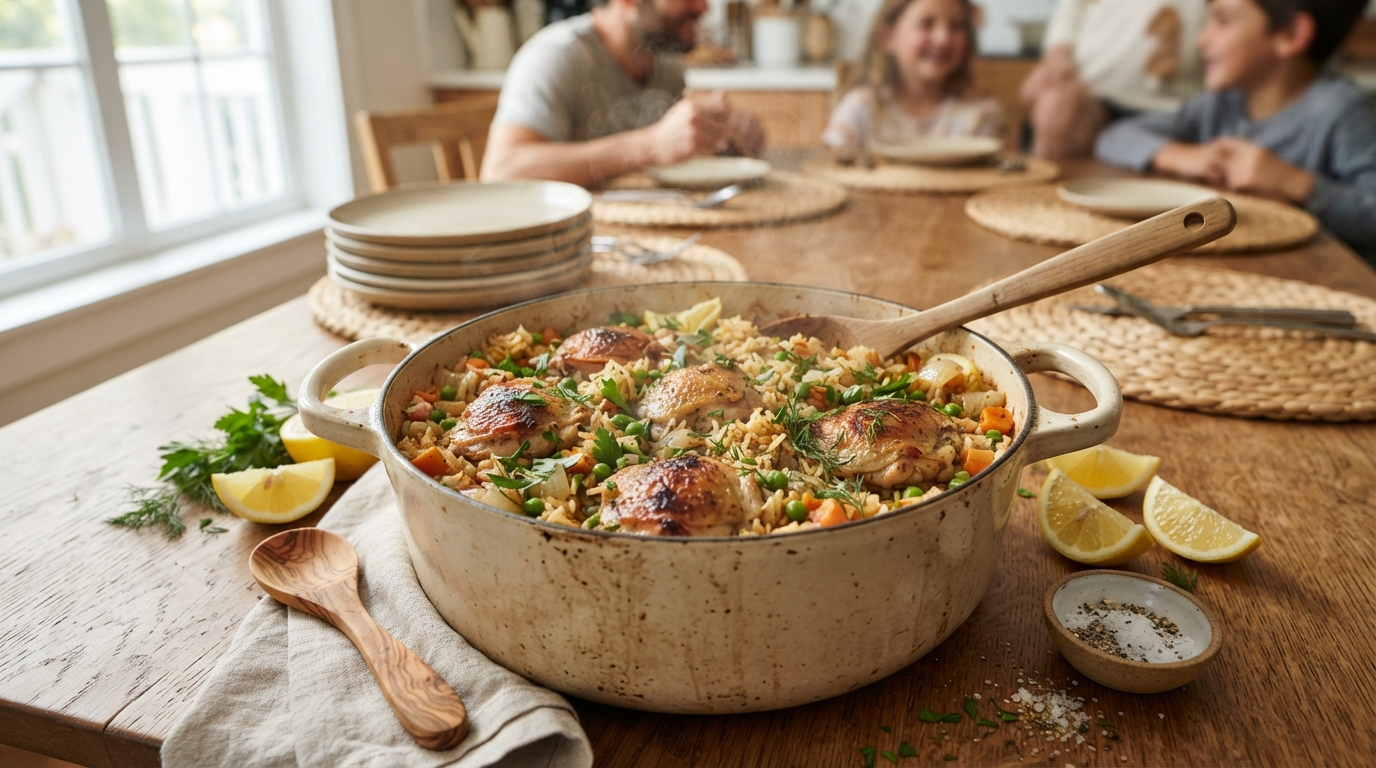
Chicken and rice earns a regular spot in a large-family rotation because it fills hungry people without expensive ingredients. Cook rice with chopped chicken thighs, carrots, peas, onion, broth, and a mild seasoning blend.
I prefer thighs because they stay juicy and usually cost less than chicken breast. Brown the chicken and onion first for better flavor. A squeeze of lemon at the end brightens the dish, and leftovers reheat well for lunch.
3. Slow Cooker Bean and Beef Chili
Few meals stretch a pound of meat like chili. Brown ground beef, then add kidney beans, black beans, crushed tomatoes, corn, onion, chili powder, cumin, and a little broth to the slow cooker.
Let it cook until the kitchen smells like you planned dinner hours ago, even if you did not. Serve it over rice, baked potatoes, or tortilla chips. Beans provide bulk, while the beef adds richness without turning the bowl into a meat-heavy meal.
4. Creamy Tuna Pea Pasta
Tuna pasta sounds humble, and that is part of its charm. Boil a large pot of pasta, then stir in canned tuna, frozen peas, milk, a little flour, garlic, black pepper, and grated cheddar for a simple creamy sauce.
I keep frozen peas around because they need no chopping and cook fast. Use two cans of tuna for a big pot, then loosen the sauce with reserved pasta water. Add breadcrumbs and broil the casserole briefly if you want crisp edges.
5. Sheet-Pan Sausage, Potatoes, and Carrots
When I want dinner with almost no babysitting, sheet-pan sausage wins. Cut potatoes, carrots, and smoked sausage into bite-size pieces, toss them with oil and seasonings, then spread everything across two large sheet pans.
Give the vegetables room so they roast instead of steaming. Paprika, garlic powder, salt, and black pepper keep the seasoning simple, while a little mustard on the sausage adds bite. Use whatever sturdy vegetables you already have before buying something special.
6. Budget Friendly Recipes for People Feeding a Large Family: Chicken Taco Bowls
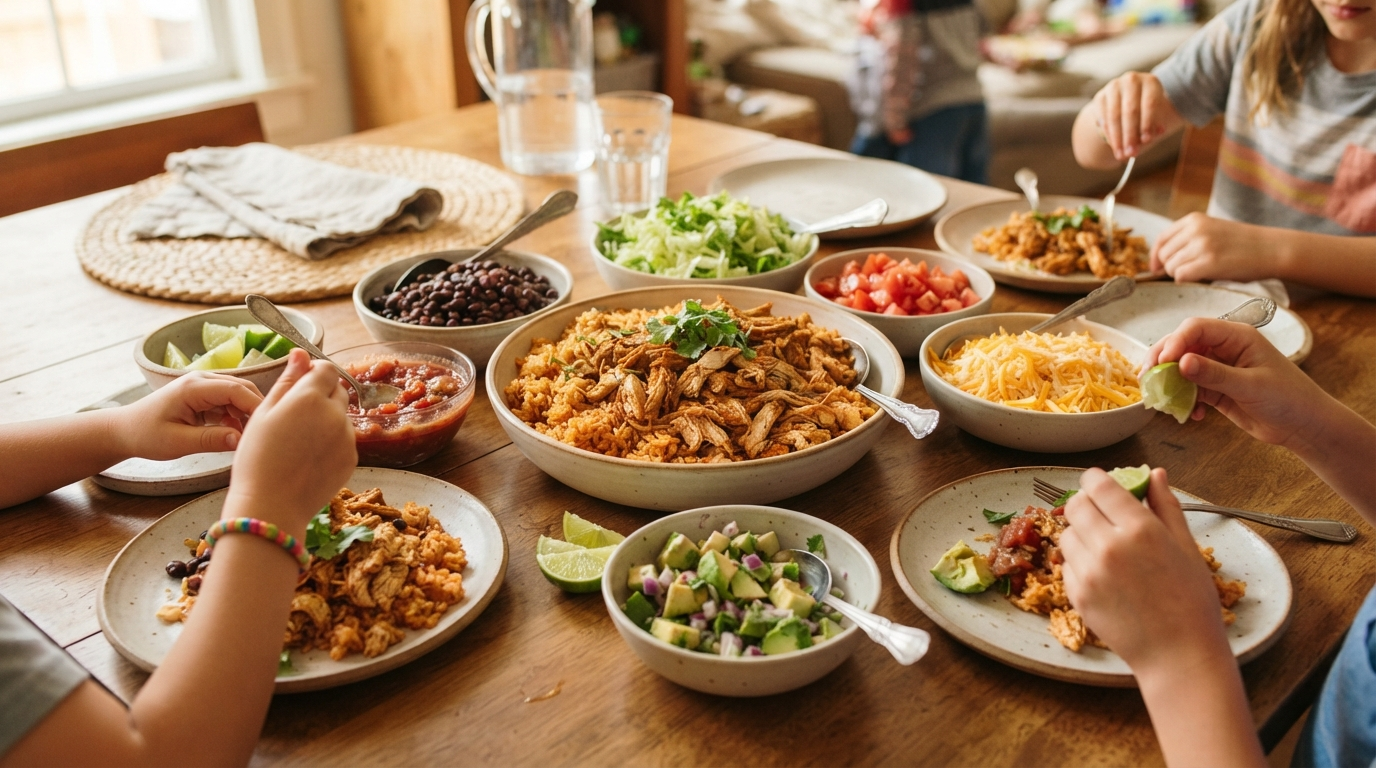
Taco bowls solve the “everyone wants something different” problem without cooking five separate dinners. Build the meal around cooked rice and shredded chicken, then set out black beans, corn, lettuce, salsa, cheese, and familiar toppings.
Everyone can assemble a bowl they actually like, which cuts down on untouched food. Stretch the chicken with beans and rice, and make extra for tomorrow’s wraps. A squeeze of lime wakes up the whole meal without adding much cost.
7. Homemade Lentil Sloppy Joes
Lentils can turn a classic sloppy joe into a cheap, hearty dinner without making the sandwich feel like health food homework. Simmer cooked lentils with tomato sauce, ketchup, onion, garlic, paprika, brown sugar, and vinegar until thick.
Pile the filling onto toasted buns and serve with carrot sticks or cucumber slices. I like this recipe when meat prices feel especially unfriendly. Mix in some cooked ground beef if your family expects a meatier filling and you still want lentils to stretch it.
8. Baked Potato Bar for a Crowd
A baked potato bar sounds almost too simple, then a table full of hungry people proves its value. Bake large potatoes until tender, split them open, and let everyone add shredded cheese, chili, beans, steamed broccoli, sour cream, or green onions.
Potatoes provide the inexpensive base, while small bowls of toppings create variety. I often use leftover chili or taco meat instead of cooking a separate topping. This dinner also works well when family members eat very different amounts because everyone controls the portion.
9. Budget Friendly Recipes for People Feeding a Large Family: Vegetable Curry and Rice
A big pot of vegetable curry can make a small grocery haul feel much more generous. Simmer onions, potatoes, carrots, chickpeas, canned tomatoes, coconut milk, and curry powder until the vegetables turn tender and the sauce thickens.
Serve it over rice, which stretches the curry even further. Use broth and plain yogurt instead of coconut milk when needed. Frozen mixed vegetables work beautifully here too, especially when fresh produce prices climb.
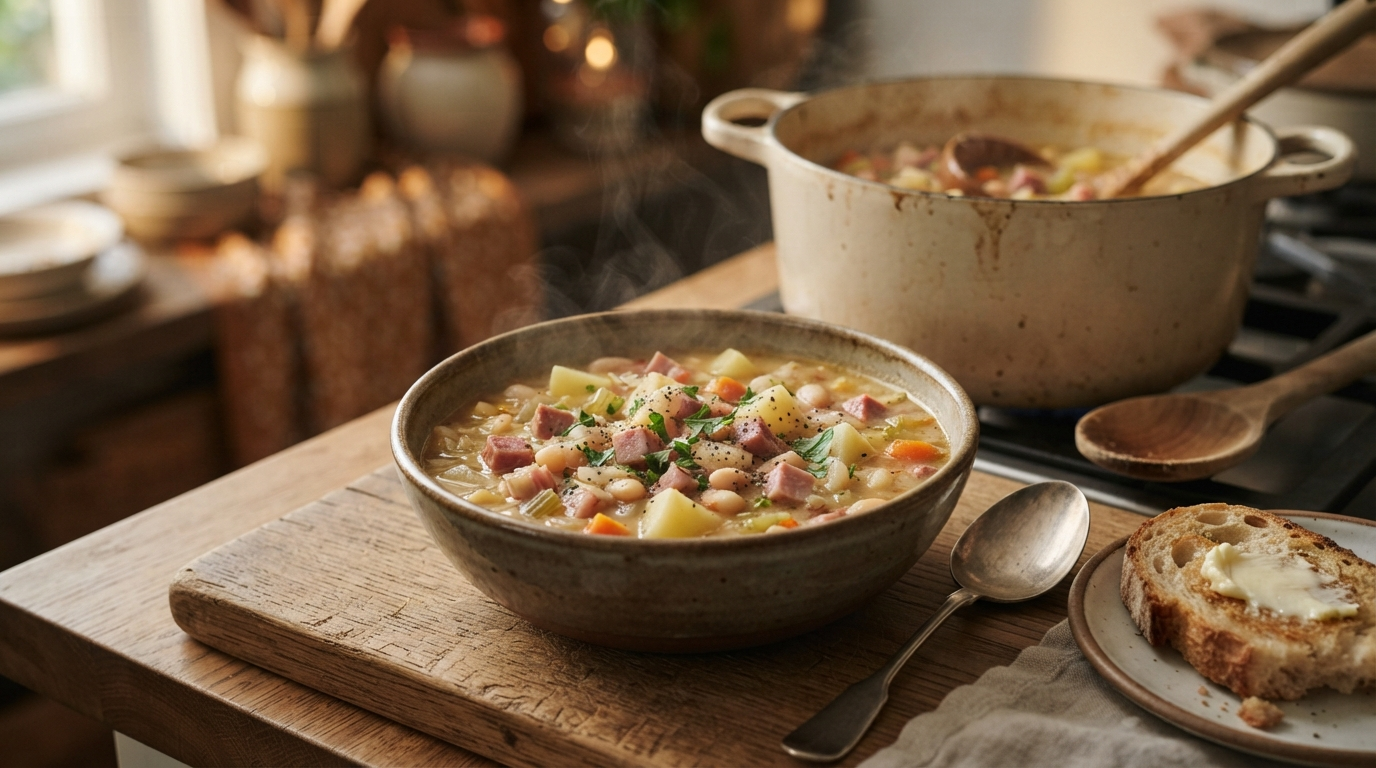
10. Ham, Bean, and Potato Soup
Soup earns its budget-dinner reputation for good reason. Dice a small amount of ham with onions and potatoes, then simmer them with white beans, carrots, celery, broth, garlic, and black pepper until tender.
Mash some of the beans against the pot to thicken the broth without cream. Serve it with toasted bread, and nobody will care that the ingredient list came mostly from pantry staples. The leftovers also taste even better after a night in the fridge.
11. Cheesy Vegetable and Egg Fried Rice
Fried rice usually starts with leftovers, which makes it perfect when you need dinner without another supermarket run. Cook cold rice in a wide skillet with frozen peas, carrots, corn, scrambled eggs, soy sauce, garlic, and chopped green onions.
Add shredded cheddar at the end for a cheesy twist. Use a large skillet or cook in batches so the rice browns instead of turning soggy. Leftover chicken, ham, or sausage can join the pan, but eggs and vegetables already make a satisfying meal.
12. Big-Pot Chicken Noodle Soup
Chicken noodle soup can feed a surprising number of people when you build the pot around vegetables, noodles, and broth instead of large chunks of meat. Simmer chicken thighs with onion, carrots, celery, garlic, and broth, then shred the meat and return it with egg noodles.
Add noodles near the end so they do not swell and absorb half the broth overnight. Serve with toast or crackers, and save extra chicken for sandwiches the next day. This dinner makes leftovers feel like a bonus rather than a chore.
FAQs
What makes budget friendly recipes for people feeding a large family actually filling?
The best strategy combines inexpensive staples with enough protein and produce to make meals satisfying. Rice, potatoes, pasta, beans, lentils, and seasonal vegetables provide bulk, while smaller amounts of meat, eggs, cheese, or yogurt add flavor and protein without carrying the whole grocery bill.
How can I make a large-family dinner stretch without making it bland?
Build flavor in layers instead of relying on expensive ingredients. Brown meat before adding sauces, season vegetables well, use garlic and onions generously, and finish dishes with lemon juice, vinegar, salsa, or fresh herbs. Small touches can make simple food taste much more complete.
Which inexpensive ingredients should I always keep in the pantry?
I keep rice, pasta, canned tomatoes, beans, lentils, broth, canned tuna, flour, and basic seasonings on hand. In the freezer, frozen peas, corn, mixed vegetables, and chicken pieces earn regular space. These ingredients give you enough flexibility to turn leftovers and odds and ends into actual meals.
Is it cheaper to cook one huge meal or several smaller meals?
For a large household, one large meal often makes better use of ingredients, oven space, and your time. The bigger savings come from planning around what you already own, buying versatile staples, and intentionally cooking enough for one planned leftover meal instead of letting extra food sit unused.
How do I stop large-family leftovers from going to waste?
Pack leftovers into shallow containers while the food is easy to portion, then label them with the date. I also like choosing one “leftover night” each week, when everyone picks from the fridge before I cook anything new. Turning extra food into wraps, bowls, quesadillas, or soup makes it feel completely different.
Conclusion
Feeding a large family does not require expensive ingredients or a different dinner every night. These meals work because they lean on simple staples, flexible leftovers, and recipes that comfortably stretch across a crowded table. Which one would disappear fastest in your house?